If your beehiiv newsletter is landing in spam, or you're launching on a new domain and want to avoid that outcome, the fix is domain warmup — gradually building trust with inbox providers before you're sending to your full list. The catch: beehiiv doesn't hand out SMTP or IMAP credentials, so there's no mailbox for a warmup tool to log into directly. That's where Seedlist Warmup comes in — it warms up the domain through beehiiv itself, using real posts sent to a seed audience.
Publishers on beehiiv send everything as a "post" to their subscriber list — there's no separate SMTP connection to hook a warmup tool into. Seedlist Warmup works around that by having you import E-Warmup's seed addresses as a subscriber segment, then send an actual beehiiv post to that segment. E-Warmup's network reads, opens, and replies to those sends, which builds the same kind of domain trust a connected-mailbox warmup would — just triggered from inside beehiiv's publishing flow instead of an inbox.
Sign up to E-Warmup and go to Seedlist Warmup
Your beehiiv publication set up and sending from the domain you want to warm up
Choose your credits. In E-Warmup, open Seedlist Warmup from the left navbar and pick a pack: 200 credits for $19, 600 for $37, or 1,000 for $55, plus custom/DFY options for larger volume. Credits carry over indefinitely, so there's no rush to use them.
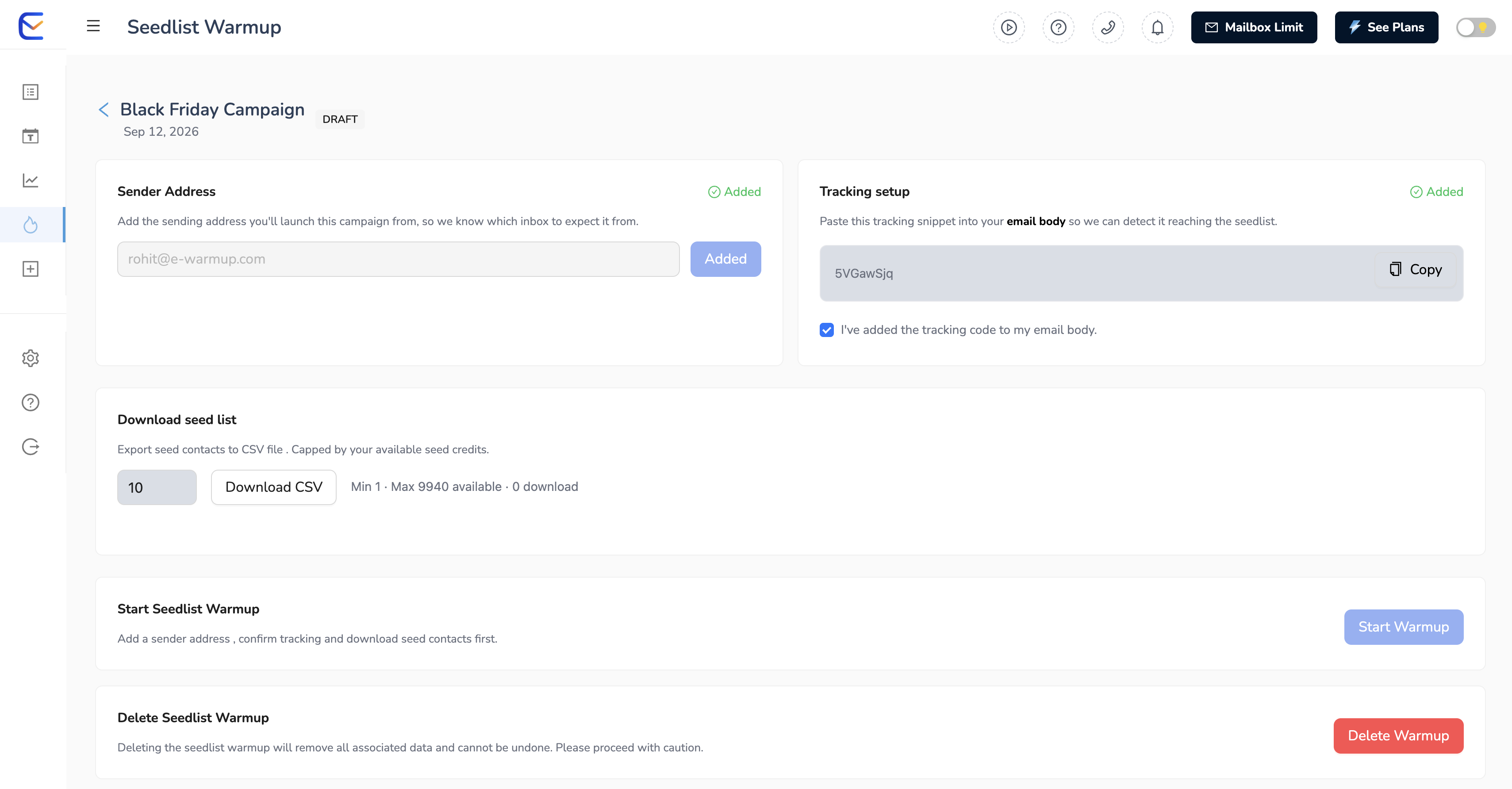
Match your sender address. Enter the exact address your beehiiv posts send from — it needs to sit on the domain you're actually warming up, or the engagement won't count toward that domain's reputation.
Get a current seed list. Download the CSV from E-Warmup — it's refreshed regularly and spans Gmail, Outlook, and Yahoo addresses. Grab a new one each time rather than reusing a saved file.
Bring the list into beehiiv. Under Subscribers → Import, upload the CSV as its own segment, kept apart from your real subscriber base — you don't want warmup sends touching actual readers.
Embed the tracking code. E-Warmup gives you a unique code — paste it into the email body of the beehiiv post you're sending to the seed segment, then confirm in E-Warmup that it's been added. Without it, E-Warmup has no way to detect the send.
Publish, then activate. Send (or schedule) the post in beehiiv to the seed segment only. Back in E-Warmup, click Start Warmup and set when engagement should begin.
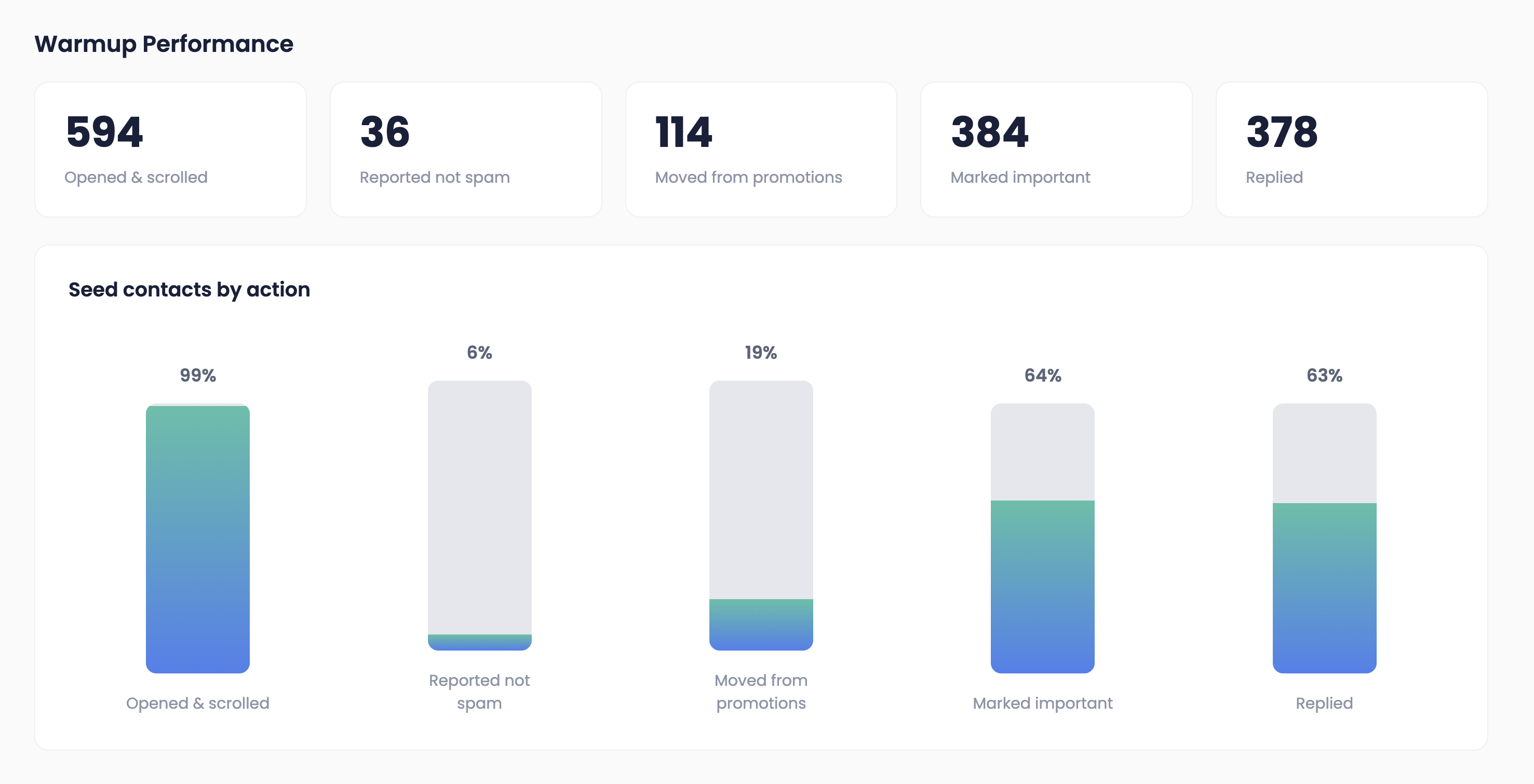
beehiiv's own analytics won't show inbox placement — that data lives on your E-Warmup campaign page, which updates as the seed addresses engage with your post.
A few things that trip people up:
Sending the post to your real subscriber list instead of the seed segment only
Stripping the tracking code out of the email body before sending
Warming up too aggressively on a brand-new domain instead of scaling seed volume gradually
Assuming credits are used at send time — they're actually consumed when you download the CSV
Why would a beehiiv newsletter need domain warmup at all? A domain with no sending history, or one that's had deliverability problems, has no trust built up with inbox providers yet. Warmup builds that trust gradually with real engagement before you send to your full subscriber base.
Does Seedlist Warmup touch my real beehiiv subscriber list? No — the seed addresses are imported as their own separate segment, and warmup posts should only ever go to that segment, never to your actual readers.
Is there an SMTP option for beehiiv instead? No, beehiiv doesn't expose SMTP or IMAP credentials, so a direct mailbox-style warmup connection isn't available on this platform — Seedlist Warmup is the supported method.
What other newsletter or ESP platforms use this same seed-list approach? Any platform without SMTP access works the same way, including Klaviyo, Mailchimp, ActiveCampaign, Constant Contact, AWeber, GetResponse, MailerLite, Moosend, Omnisend, HubSpot, and Shopify.